
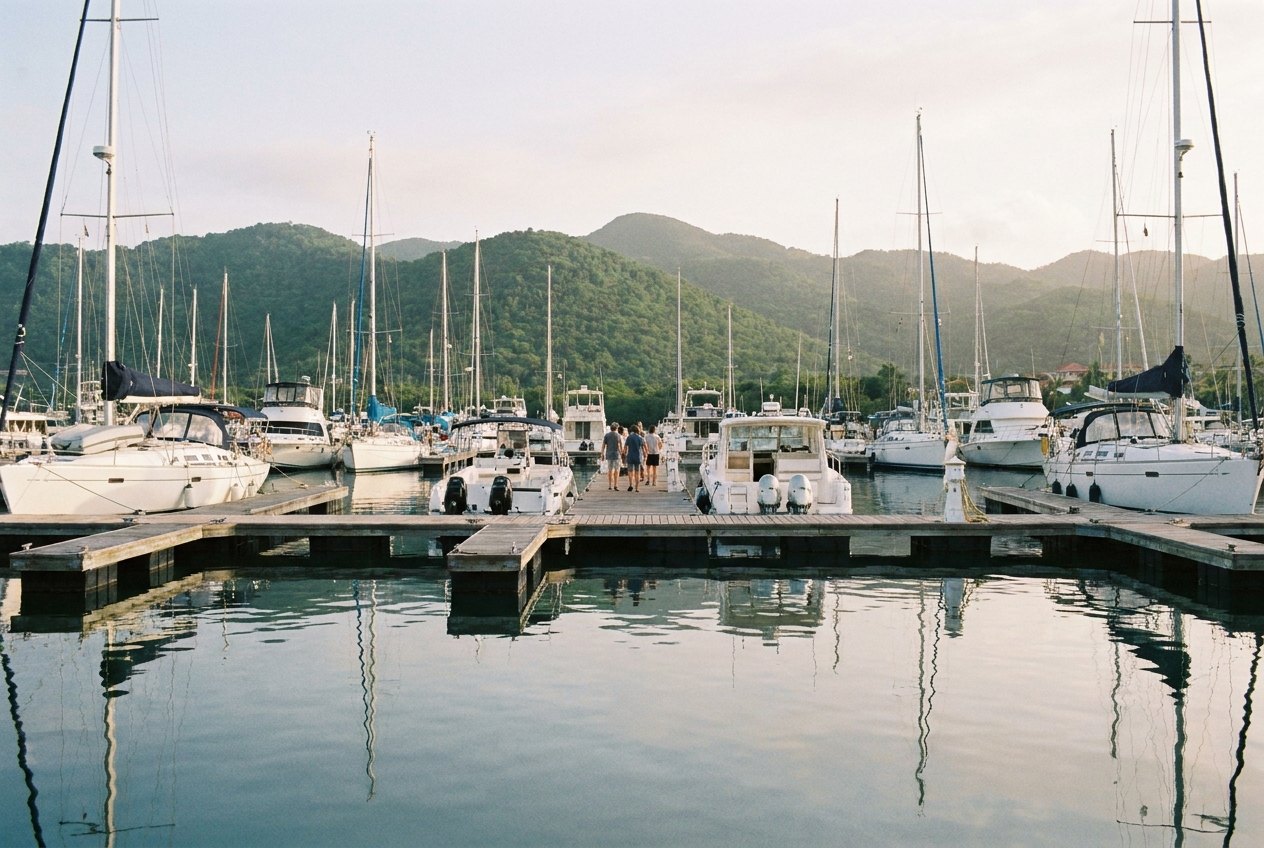
Fajardo is a municipality on the north-east corner of Puerto Rico, where the island's coast turns south and looks out towards Culebra, Vieques and, on clear days, the Virgin Islands beyond. The water between them is dotted with small cayes and protected by reefs, which makes it some of the most sheltered sailing ground in the Caribbean. That geography explains why the coast around Fajardo is lined with marinas, some of them among the largest in the region, and why it is so often called the boating capital of the island.
For a visitor, Fajardo is less a town to wander than a base. From here boats leave for the cayes of the La Cordillera reserve, kayaks set out at night for the glowing water of Laguna Grande, and the drive south leads to the ferries for the two island municipalities. The town centre itself, inland from the coast, is a working place of shops and offices around a plaza with a church.
A coast made for boats
The marinas sit along the shore north and south of town. Hundreds of sailboats and powerboats are kept here, some by island residents, many by owners from the mainland United States who sail them during the winter months. Charter yachts, dive boats, fishing boats and day-trip catamarans all work from these docks. Walking along a marina's public areas at the end of the day, when boats return and are hosed down, gives a sense of how much of local life is tied to the water.
The appeal is easy to see on a chart. Within a short run of the coast lie the uninhabited cayes of the La Cordillera Nature Reserve, the beaches of Icacos and its neighbours, and the larger islands of Culebra and Vieques further out. Beyond them is the passage to the Virgin Islands. Calm mornings and steady trade winds make it a good place to learn and to sail.
Calm mornings and steady trade winds make it a good place to learn and to sail.
Las Croabas
On the northern edge of the municipality, the small fishing village of Las Croabas sits at the end of the road beside a seaside park. Wooden fishing boats are pulled up on the shore, pelicans dive in the bay, and a breezy promenade looks across the water to the cayes. Many of the kayak trips into Laguna Grande start nearby, and some boats to the cayes leave from the area as well. It is a pleasant place to watch the sunset and to sit by the water before a night paddle.
ALSO ON THIS STRETCH OF WATERLaguna Grande, the bay that glowsSeven Seas and the beaches
Just north of Las Croabas, Seven Seas is a public beach, a balneario, with a long curve of sand, calm water and facilities. It is popular with local families on weekends. Further along, a walking trail leads through coastal forest to quieter beaches, and to the edge of the Cabezas de San Juan nature reserve at the tip of the coast. Swimming is generally easier on the sheltered beaches than on the more open shore.
Fajardo is about an hour's drive east of San Juan along the main highway, longer in traffic. A car is the easiest way to get around the coast, since public transport is limited. For the islands, the passenger and cargo ferries now leave from a terminal in neighbouring Ceiba, a short drive south, rather than from Fajardo itself.
The dry season, roughly December to April, brings the steadiest weather. Summer and autumn are hotter and fall within the Atlantic hurricane season, which runs from June to November; see our notes on hurricane season on the coast if you plan to come then.
Using Fajardo as a base
A few days here can take in a night on Laguna Grande, a day out to the cayes, a visit to the lighthouse reserve, and a morning in El Yunque, the rainforest that rises behind the coast. If you have time, the ferries make day trips to Culebra and Vieques possible, though both islands deserve a night or two.