
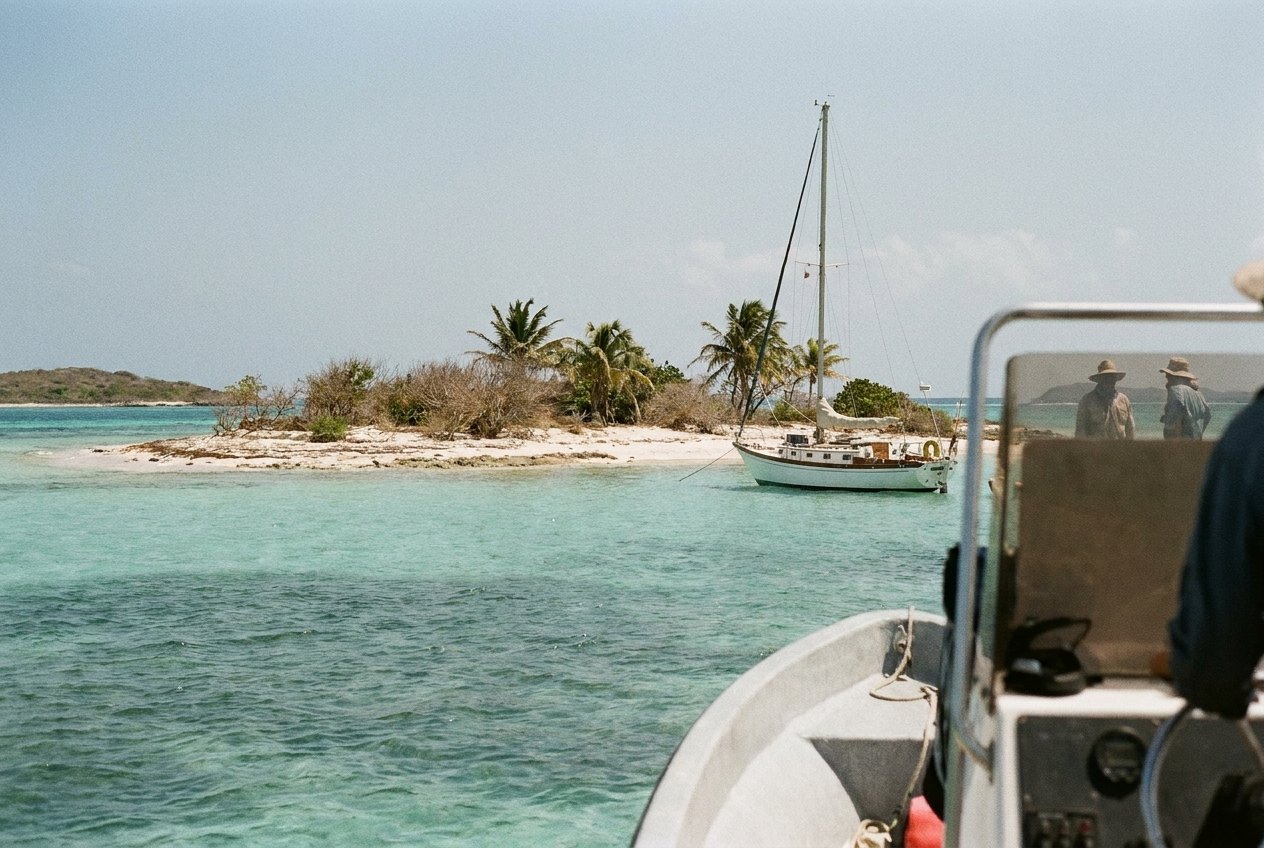
East of Fajardo, a chain of small cayes and reefs stretches out into the sea towards Culebra. Most of them are part of the La Cordillera Nature Reserve, created in 1980 to protect the islands, their beaches and the reefs and seagrass around them. The cayes are low, sandy and mostly uninhabited, and the water around them is clear, shallow and turquoise. Icacos is the largest and the most visited, and it is the usual destination for day trips from the mainland.
Icacos
Cayo Icacos is a long, narrow island of white sand and low scrub, with beaches along much of its sheltered side and reef just offshore. There is nothing on it: no buildings, no shops and no fresh water. Boats anchor off the beach, and visitors wade ashore to swim, snorkel and lie in the sun. At its ends, sandbars run out into the shallows, and on calm days the water is clear enough to see the bottom from a boat at anchor.
Snorkelling from the beach can be good, with patches of coral, sea fans and reef fish, and sometimes rays and turtles over the seagrass. Visibility depends on wind and swell. Never stand on or touch coral, and keep your fins up when you are over shallow reef.
Other cayes
Several other cayes lie along the chain. Some are within the reserve and closed to landing to protect nesting birds; others are privately owned and not open to the public. Palominito, a tiny islet near a larger private island, is a stop on some trips. Your boat operator will know which places can be visited, and the rules can change, so follow their guidance.
ALSO ON THIS STRETCH OF WATERSnorkelling the east coast and its islandsThe usual way out is a day trip by catamaran or motorboat from the marinas around Fajardo. These trips typically include snorkelling stops, drinks and lunch on board, and time on the beach at Icacos. Smaller water taxis offer simpler drop-off and pick-up trips. Experienced sailors and powerboat skippers anchor there too, especially on weekends, when the cayes can be lively. Weather decides everything: strong winds or high seas cancel trips, and the crossing can be bumpy even on good days.
A day on a caye
The cayes are exposed and the sun is strong. If you are not on an organised trip, bring food, shade and a bag to carry out every scrap of rubbish. Sand flies can bite in calm conditions, and broken coral and sea urchins make water shoes a good idea.
The reserve exists because these small islands are fragile. Turtles nest on some of the beaches, seabirds use others, and the reefs and seagrass support fish that are important for the island's fishing families. Leave no trace, stay off closed areas and give wildlife plenty of room.
For the bigger islands beyond the chain, see our notes on Culebra and Vieques, or start back on shore in Fajardo.