
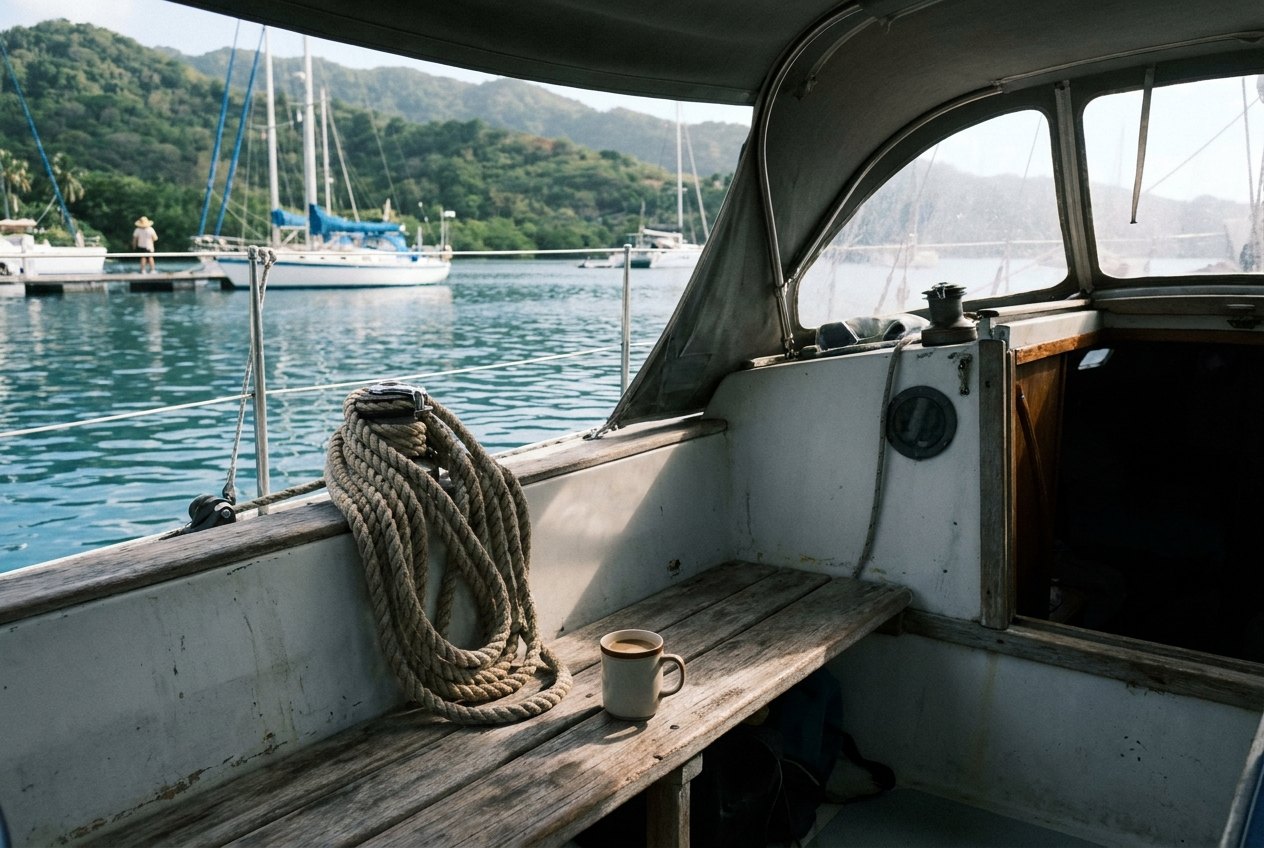
The marinas along Puerto Rico's east coast hold hundreds of boats, and some of them are lived on, for a season or for years. Others are used for short stays by owners and their guests. Spending a week aboard a boat tied up in a marina is a very different experience from staying ashore: the water is right outside, the evenings are cooled by the breeze, and the routines of a working harbour become your routines too. It also has practical limits that are worth knowing.
Space
Everything on a boat is smaller than on land. Cabins are compact, ceilings low in places, and storage is tucked into every corner. Bring a soft bag rather than a hard suitcase, since it can be folded away. Keep belongings stowed; anything left loose ends up on the floor when another boat's wake rolls through. Heads, the marine toilets, have their own rules, usually including that nothing goes into them except what the body produces and a little toilet paper. Follow them carefully; a blocked head is a miserable job to fix.
Water and power
At a marina berth, boats usually connect to shore power and to a fresh water supply. Even so, water on board comes from tanks and is not unlimited, and electrical systems can be sensitive to too many appliances running at once. Short showers, careful use of air conditioning where fitted and charging devices during the day keep things running smoothly. Marina facilities usually include showers and laundry on land, which many people prefer to use.
ALSO ON THIS STRETCH OF WATERFajardo, the east coast's boating townHeat, mosquitoes and motion
Caribbean marinas are hot, especially when the wind drops. Hatches and portholes open for air, and a small fan makes a big difference at night. Mosquitoes and tiny biting sandflies come out at dusk near mangroves; nets on hatches and long sleeves in the evening help. Boats move gently even at the dock, rocking with wind and wakes. Most people find it soothing after a night or two; if you are prone to seasickness, choose a cabin in the middle of the boat, where the motion is least.
Marina routines and manners
- Walk carefully on docks; they can be wet and uneven, and lines and cleats are trip hazards.
- Keep noise down in the evening; sound carries across water.
- Never climb onto other people's boats without being invited.
- Follow the marina's rules on rubbish, recycling, fuel and grey water.
- Wear soft, non-marking shoes on deck, or go barefoot.
From the boat to the water
One of the pleasures of a marina stay is how easily the water becomes part of the day. Kayaks and bicycles are common companions: a bicycle to reach shops and beaches, a kayak to explore mangrove channels and quiet coves at dawn. From the east coast marinas, the reserve at Cabezas de San Juan, the night paddle on Laguna Grande and boat trips to the cayes are all close by. In the hurricane season, boat owners watch the forecasts closely; see our notes on hurricane season on the coast.