
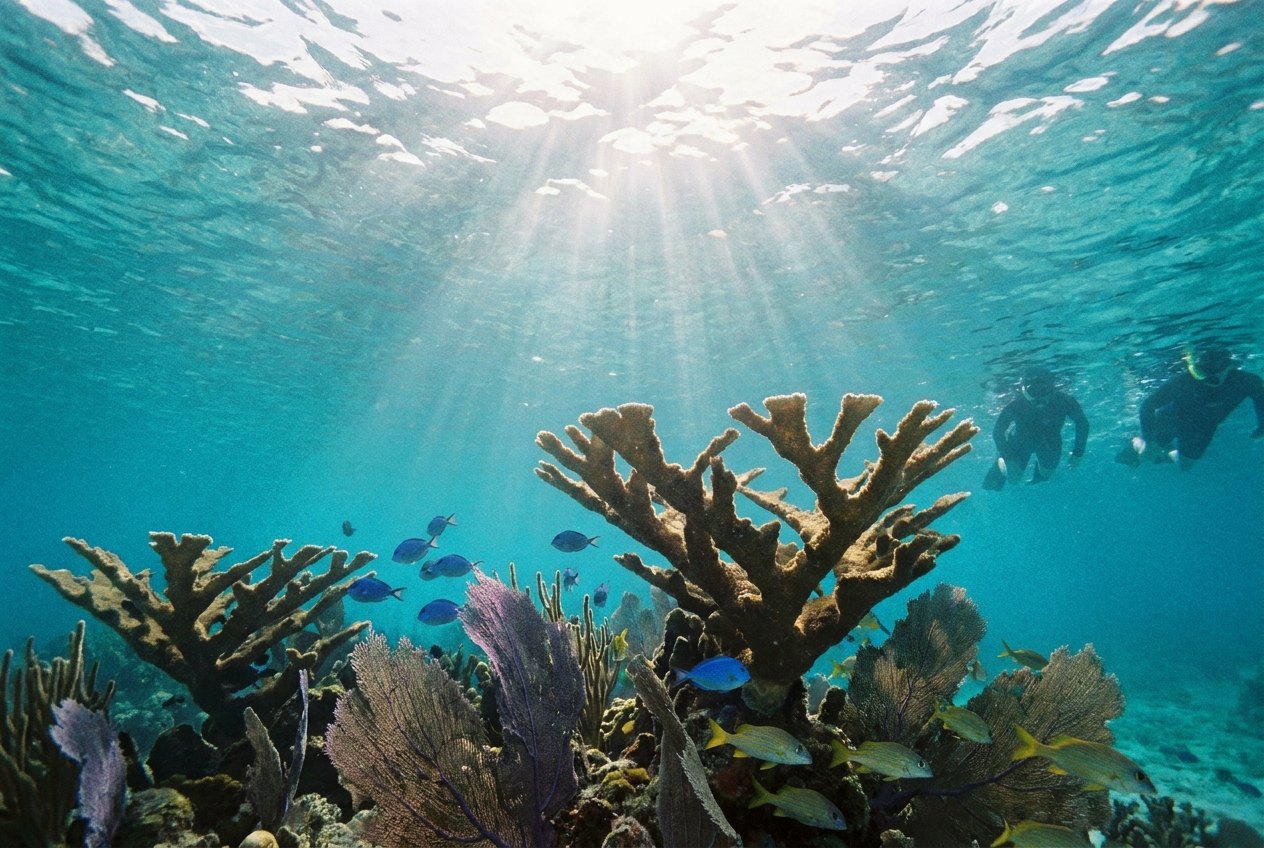
Puerto Rico is surrounded by coral reefs, seagrass beds and rocky shores, and some of the best of them lie in the east, around the cayes off Fajardo and the islands of Culebra and Vieques. Much of this water is protected in reserves. Snorkelling needs no certification and little gear, and from many beaches you can swim straight from the sand to the reef.
What you will see
Coral reefs here are built by many species, including the branching elkhorn coral, once dominant in shallow Caribbean water and now listed as threatened after disease and bleaching. Brain corals, sea fans and sponges fill the gaps. Among them swim parrotfish, whose grazing produces much of the white sand on the beaches, blue tang, sergeant majors, angelfish, trumpetfish and, with luck, octopus and lobster hiding in crevices.
Seagrass meadows are just as important. Green sea turtles graze on them, and stingrays and conch move over the sand between the blades. Seeing a turtle surface for air a few metres away is one of the great experiences of the region.
Where to go
Seeing a turtle surface for air a few metres away is one of the great experiences of the region.
- Escambrón, San Juan. A public beach in the capital, protected by a breakwater and a reef, with calm water and surprising marine life for a city beach. Good for beginners and for a first swim before heading east.
- Carlos Rosario, Culebra. A reef close to shore, reached by a short walk from the Flamenco area. The coral and fish are among the best on the island. Watch for boat traffic beyond the reef.
- Tamarindo, Culebra. Seagrass beds in a marine reserve where green turtles feed; calm on most days.
- Icacos and the cayes. Clear shallows and patches of reef reached on day trips from Fajardo.
- The Vieques refuge beaches. Several coves have reef at their edges, with quieter water than the open coast.
Safety in the water
Most snorkelling accidents happen when people underestimate the sea. Swim with a buddy, wear fins so that you can move against a current, and stay close to shore unless you are on a guided trip. Look out for boats; a brightly coloured snorkel buoy makes you easier to see. If you are caught in a current pulling you out, swim parallel to the shore until you are free of it.
Reef-safe habits
- Never stand on, touch or kick coral; even a light touch damages the living tissue.
- Use sunscreen labelled as reef-safe, or better, cover up with a rash guard.
- Do not feed fish or chase turtles and rays.
- Take nothing living, including shells with animals inside.
Visibility is usually best on calm days with light wind. In winter, northern swells can stir up the north coasts while the south shores stay clear; in summer the pattern often reverses. Water is warm all year, around the mid to high twenties Celsius. For more on the islands, read our notes on Culebra and Culebrita.