
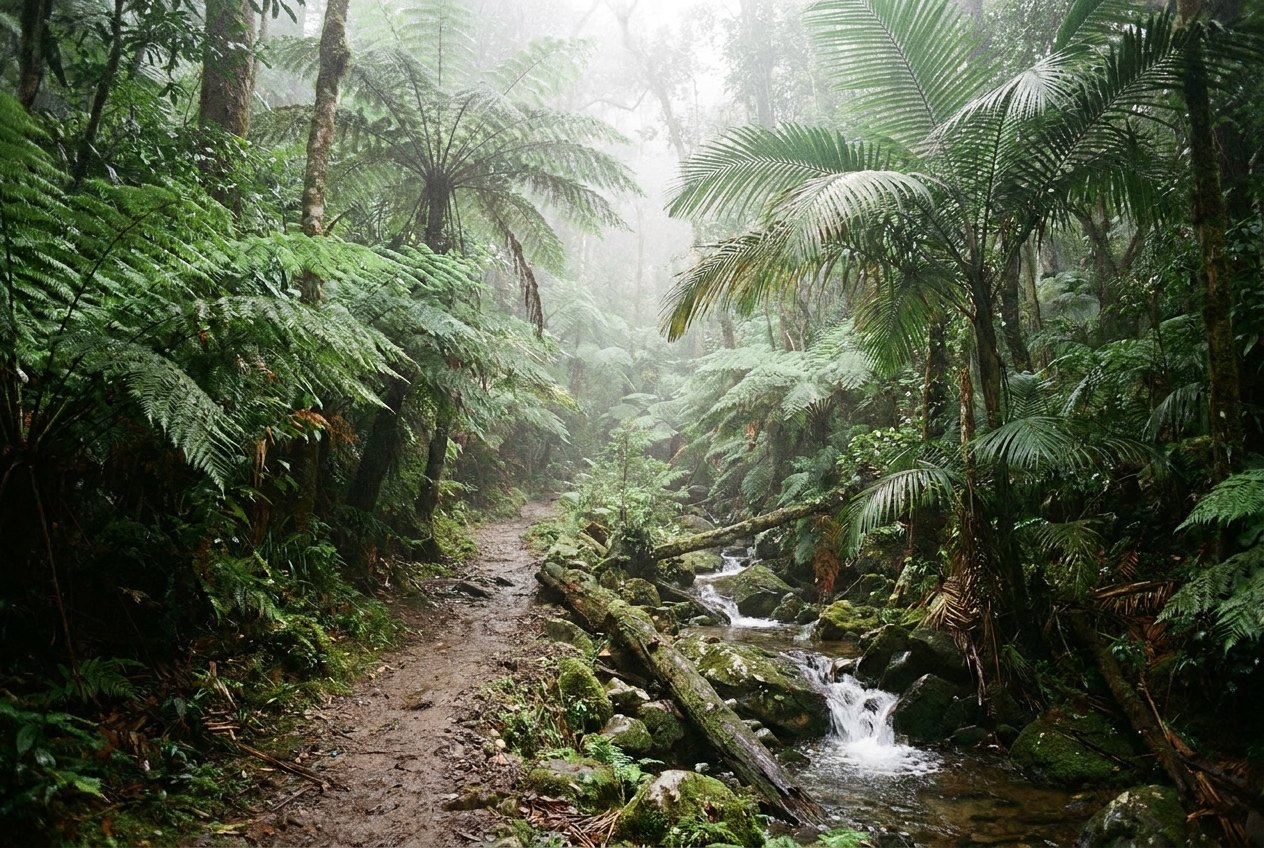
El Yunque National Forest covers the Luquillo Mountains in the north-east of Puerto Rico, rising from near sea level to over 1,000 metres within a short distance of the coast. Warm, moist trade winds drop their rain on the slopes, and the upper forest receives several metres of rain a year. It is the only tropical rainforest in the United States National Forest System, and one of the oldest protected forests in the Western Hemisphere, first set aside under Spanish rule in the 19th century.
The forest road
The main way in is the road that climbs into the forest from the town of Río Grande, passing viewpoints, waterfalls, picnic shelters and trailheads. In recent years, visitors entering by this road during the day have needed a reservation, issued online for timed slots for a small fee; the system and its rules change. Parking at the most popular stops fills quickly, which is one more reason to arrive early.
Along the lower road, look out for La Coca Falls, which drops straight beside the road, and the Yokahú Tower, a stone observation tower built in the 1960s. From its top, the view stretches over the forest to the coast, the cayes off Fajardo and, on clear days, the islands beyond.
La Mina Falls
The most popular walk leads down through the forest to La Mina Falls, where a stream pours over rocks into a pool. The trail is paved or stepped in places and slippery in others, and it can be crowded at midday. After Hurricane Maria in 2017, damage closed the trail for several years before it reopened. Trails here close regularly for repairs or after storms.
ALSO ON THIS STRETCH OF WATERLuquillo Beach and the row of kiosksLife in the forest
El Yunque is home to many species found nowhere else. The most famous is the coquí, a tiny tree frog whose two-note call, ko-KEE, fills the night across Puerto Rico and is loudest in the forest after rain. The Puerto Rican parrot, a bright green bird brought close to extinction, has been the focus of a long recovery programme here. Giant tree ferns, palms and epiphytes cover the slopes, and the upper peaks hold a dwarf cloud forest of stunted, moss-covered trees.
Rain and safety
It rains in El Yunque almost every day, often in brief, heavy showers. Bring a rain jacket and expect wet trails. Streams can rise very quickly after heavy rain, and flash floods have caused deaths; never cross a rising stream, and leave pools and riverbeds at the first sign of the water turning brown or rising. Stay on marked trails.
Combining forest and coast
Most visitors combine the forest with the coast on the same day. A morning in the forest, when it is cooler and drier, followed by a swim at Luquillo Beach in the afternoon is a classic plan. The forest is also within easy reach of Fajardo and the marinas. Facilities are limited inside the forest, so bring water and food.